
Tera Battle of Regions 2026 - Draycote Water SC

Updated: Apr 23
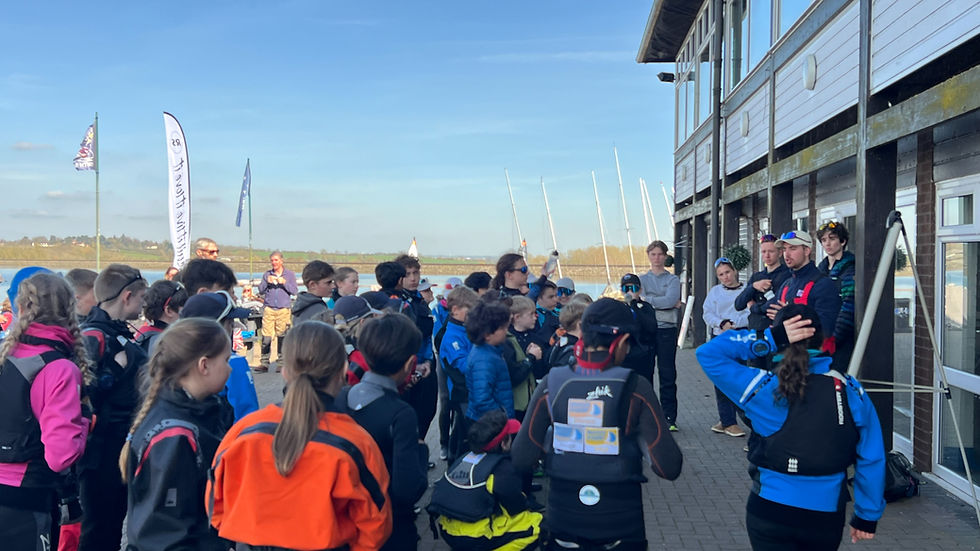
I was fortunate enough to be invited as lead coach for the 2026 edition of the Battle of Regions, which is the class association's "all squads". All squad sailors across the regions and the performance academy were invited for a weekend of coached racing at Draycote Water to finalise their learning from an extensive winter program and put what they have learnt into practice against the rest of the fleet. It was a great insight to see where sailors ranked up against each other ahead of the next class event, Start of Seasons, which is about a month away.
Format and Conditions
The usual split for the BOR is a day's worth of coaching, finalising learning from the winter. Typically, this starts with big fleet starting practice, as this is the first chance for sailors to experience a larger fleet after practicing in smaller groups. This is then followed by a day of coached racing in groups.
Unfortunately, we faced a challenging forecast that meant we had to adjust our plans slightly. With light winds expected throughout the weekend and only slight windows of opportunity to get out on the water on Sunday, the coaching team focused on the timing of a trigger in relation to the start. With the intention for the racing to be sprints, the starts in lighter airs became even more important!
Saturday: Key Focus Areas
The focus for many was to nail certain aspects of the start that are critical for starting in lighter airs:
Time to rack up on the start
Timing of the trigger pull
Necessity to be in the first row
Mode to be sailing after GO
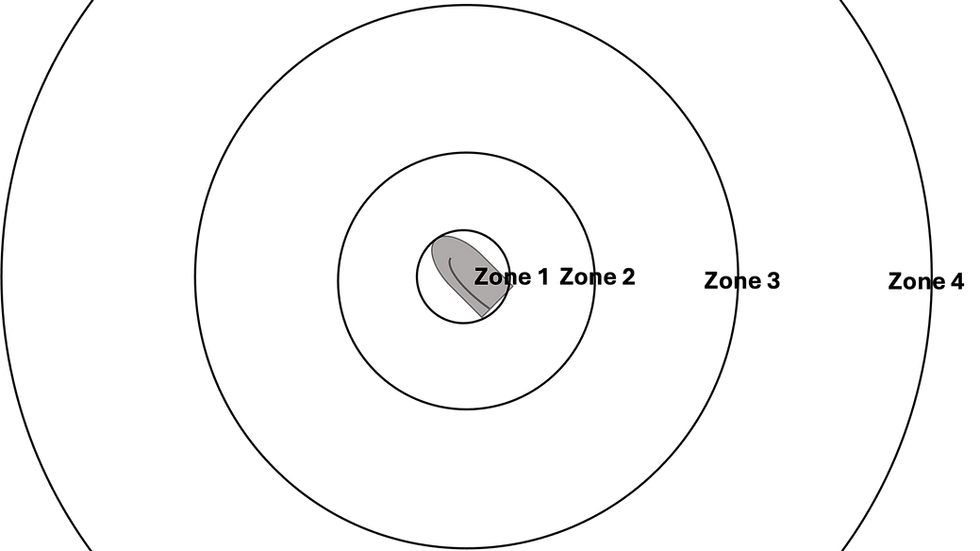
With unstable pressure throughout the day, we introduced a framework to help sailors prioritise their awareness—focus zones:
Zone 1: Everything in your boat. This is where we focus on boat speed and handling.
Zone 2: Within three boat lengths. This includes boat-on-boat situations, prepping for gusts, lulls, and analysing waves for optimal navigation.
Zone 3: The course itself. This encompasses everything across the course, including which side is favoured, the direction of the fleet, and leverage.
Zone 4: Beyond the course. This includes clouds, topography, distant gusts, and potential gain features.
The key message: All zones matter, but the weighting shifts depending on the conditions.
Sunday: Learning and Adaptation
We managed to complete one race before conditions shut down. After that, we transitioned ashore for further learning. This included:
Breaking down the forecast and synoptic charts
Reinforcing movement and flow in the boat
Introducing the principle of KISKIM – Keep It Smooth, Keep It Moving
Next Steps: Preparing for the Start of Seasons
It was a fantastic weekend to gather all the squads and practice the dynamics of a larger fleet around the race course. With the Start of Seasons just under a month away, this practice was incredibly useful. It would be beneficial for sailors to revisit the topics we covered in the lead-up to the upcoming event.
The Importance of Continuous Learning
As we move closer to the Start of Seasons, it's crucial to keep the momentum going. Continuous learning is key in sailing. Each session builds on the last, and the insights gained will be invaluable.
Engaging with the Community
I encourage everyone to engage with one another. Share experiences, tips, and strategies. This community is a treasure trove of knowledge. By sharing what we've learned, we can all grow stronger as sailors.
Final Thoughts
Sailing is not just about the races; it's about the journey. Every moment on the water teaches us something new. Let's embrace these lessons and support each other as we prepare for the challenges ahead.
For questions or extra insight, get in touch at dylan@apexsailing.co.uk or follow @apex_sailing on Instagram and Facebook.


Comments